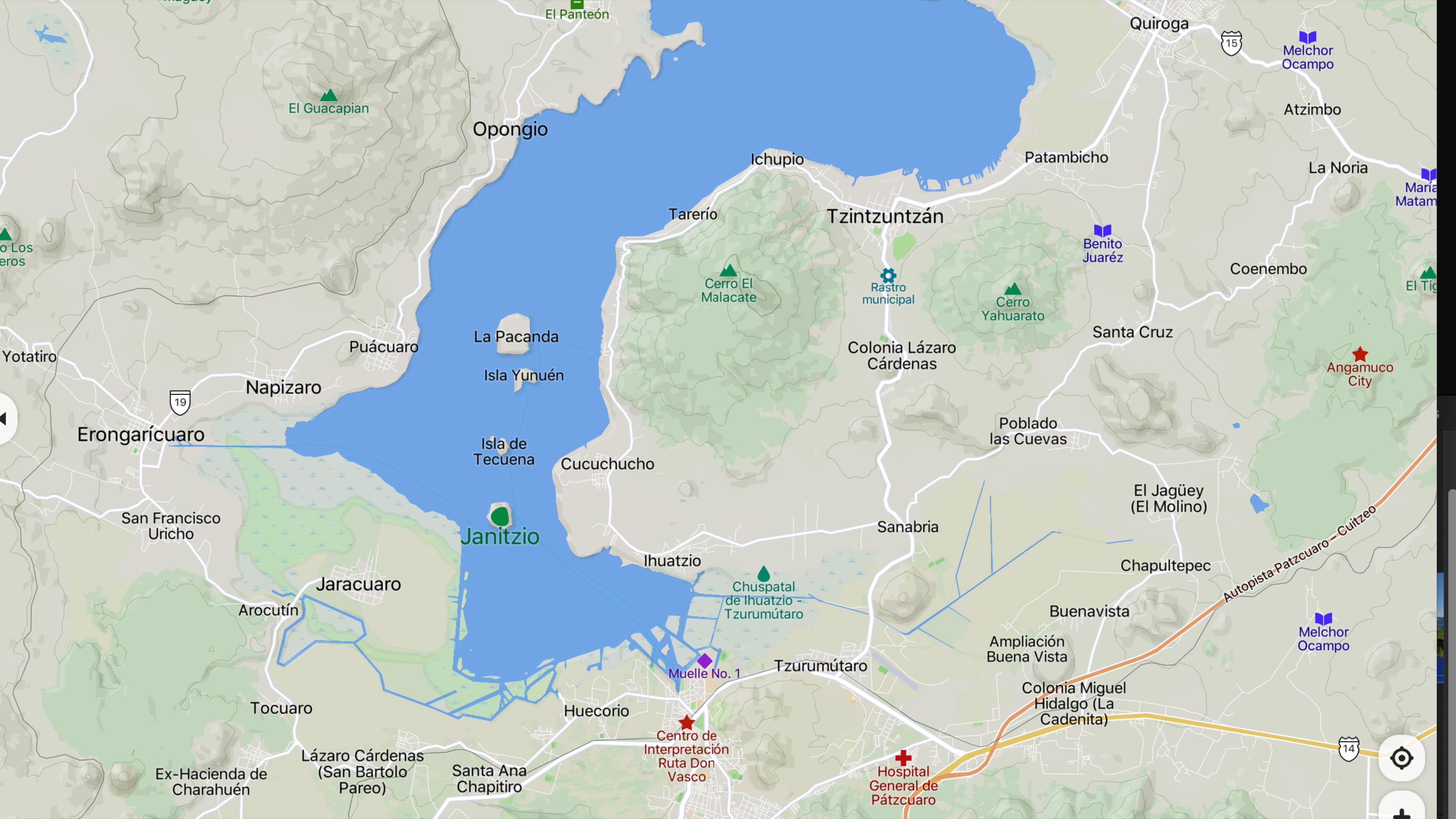
I picked a sunny day and headed out to see the village of Tzintzuntzan. Only about 20 minutes from Patzcuaro, there are about 15K residents and the area has a fascinating history! I didn’t know what an interesting day it would turn out to be!
Between the 14th and early 16th Centuries, the P’urhépechas dominated western Mexico with an estimated population of more than one million; Tzintzuntzan was their capital, where the ruler lived.
They chose this area for many reasons: the giant lake had several habitable islands, lots of fish and a surrounding landscape lush with mountains with forests of pine, oak and fir. The area is so beautiful and mystical that the P’urhépechas believed the lake was a gateway to heaven.
The founding of Tzintzuntzan was most likely around AD 1450. The most distinct of their monuments at Tzintzuntzan are five yácata pyramid, which unlike Aztec or Maya pyramids were round shaped structures linked together by stepped platforms. On each of the yácatas was a temple made of wood, in which the most important rites of the Purépecha people and government took place.
When people think about Mexico before conquistadores, they usually think about the Aztecs, but what they don’t know is that the P’urhépecha existed at the same time – and they were such a fierce and mighty empire that they were one of the only indigenous groups in Mexico that the Aztecs failed to conquer.
Unfortunately, Little is known about the cultural history of the Purépecha as there are no surviving written records, with most accounts coming from the Franciscan priests, written in the 1500s by transcribed oral histories spoken by the Purépecha elders.
An important feature of life in Tzintzuntzan was the development of metallurgy to an extent that was unequaled in Mesoamerica. The ancient metallurgists used various techniques in order to make working tools, or gold and silver jewelry, and even alloys using tin and arsenic. Copper was the most commonly used metal, extracted from the mines to the south of here.
The gold and silver smiths of Tzintzuntzan worked these and other metals to produce rattles, pendants, and ornamental objects for the ruler and important priests.
And it is thought that this is one of the reasons they were never dominated by the Aztecs!
When the Spanish came there was a time of terrible brutality under the Conquistador named Guzman. He put the ruler of the people to death despite being met with no violence himself. The capital of the new Spanish province of Michoacán was moved to Pátzcuaro, eventually resulting in the decline of the city until it was abandoned.
Unlike Guzmán, who was a viciously murderous and enslaving conqueror, when the first Bishop, Quiroga came to Michoacan they say he was largely benevolent. He assumed a role of protector, spiritual father, and judge to the Purépecha.
Don Vasco de Quiroga, a Spanish aristocrat was the first bishop of the province of Michoacán. Quiroga is remembered here with much affection because he worked against the worst of Spanish abuse, and his statue overlooks the Plaza of his name in Patzcuaro today.
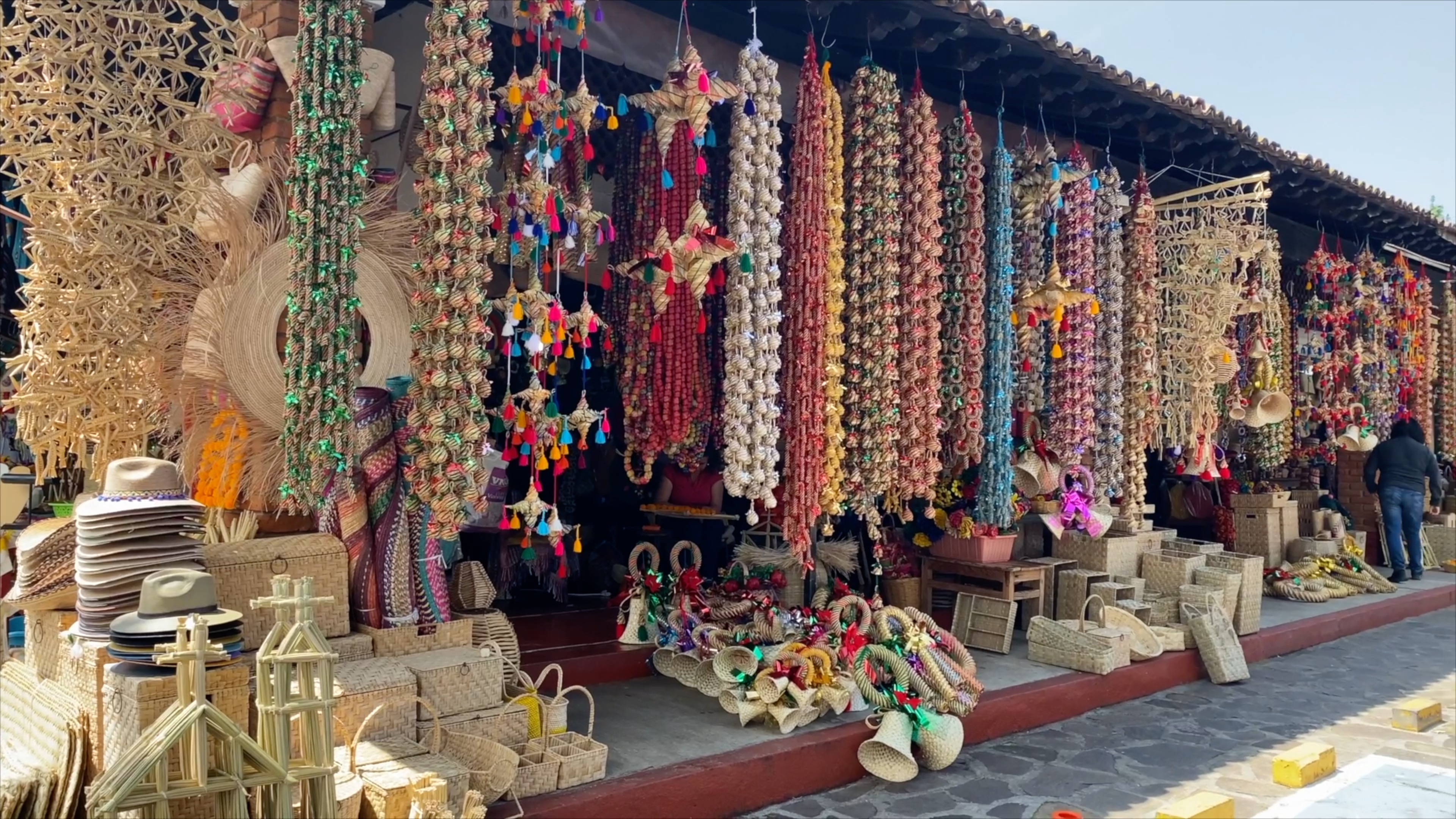
The Purépecha were already accomplished artisans when Quiroga came. When he organized the pueblos, he assigned each town to a specific craft in order to avoid competition and to encourage trade among them. Many of these crafts are practiced even today by generations of artisans.
Today Tzintzuntzan is a town of about 15K people and I saw more apparent tourists here than I have seen in any other village in Michoacan. I was delighted to see their colorful crafts market, and the place had a lively feel.
Immediately after getting out of my car I noticed that I was next to some kind of event. There was live music and lots of people. I soon saw the hearse and flowers and realized it was a funeral procession, with lots of people, including the band, walking behind the hearse. I tried to stay out of the way and took a little video as discreetly as I could. I let the procession pass me and then wandered into the craft mercado.
Next to the market was the gate into the Convent of Santa Ana and the Templo de San Francisco with much of the building material obtained from the nearby yacata pyramids that the Spanish destroyed.
The complex’s garden is a large, park-like setting and is named the Atrium of the Olive Trees due to the large gnarly trees that were planted here by Bishop Quiroga in the 16th century. I was walking slowly, appreciating the serenity of the grounds and taking a few pictures, when I heard the funeral procession music coming from my right. The group had circled around and was back to where I was, apparently on the way to the church. The hearse had parked and six men were shouldering the coffin as they walked solemnly up the path, the group of mourners following and the band playing.
I wandered and continued checking out the chapple, and the old convent. It’s a very serene spot with the giant trees and feels insulated from the rest of the town by the monastery’s high walls. It was silent except for the singing I could hear from the church members at the funeral, which made the setting feel even more serene and magical.
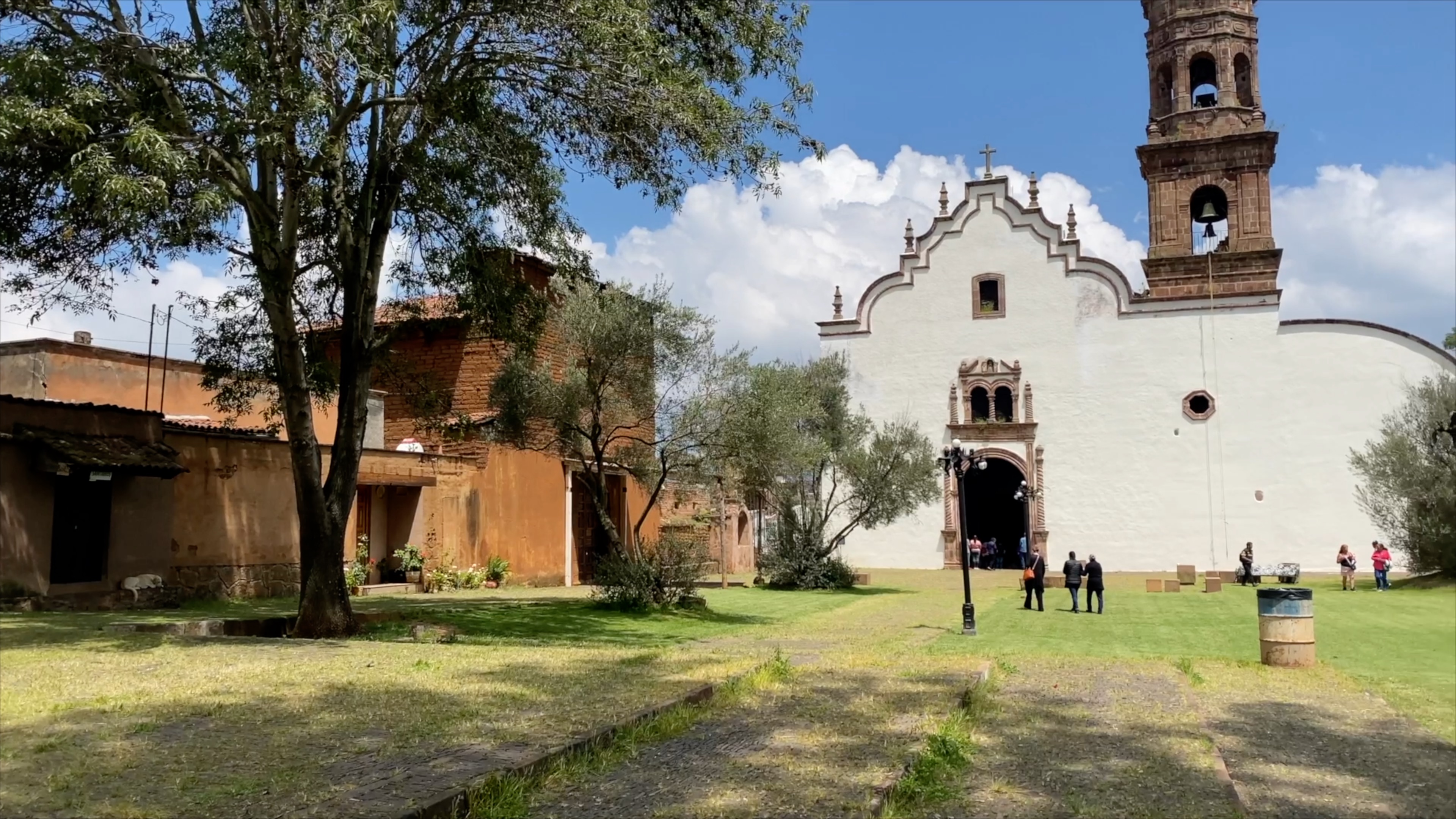
It seems like every time I try to see a church lately it’s being used for something important, but I walked into the chapel which was very pretty.
Before I knew it the funeral procession was coming out of the temple and I walked behind the giant old olive trees, staying out of the way.
I was in a corner of the large garden by myself until a tiny old woman walked my way over the grass. She was in the bright clothing of the Purepecha and was carrying a box of something in her arms.
Suddenly 4 big dogs ran towards her and surrounded her, barking and snapping. I couldn’t believe their audacity! The tiny woman froze as the dogs circled her and I had to do something. I ran the few meters between us in my bright pink shirt and swung my little backpack to hit the rear of the closest dog to me. He felt it and was surprised and this seemed to scare the group of dogs and they slinked off. I touched her shoulder. She was very shaken and I lapsed into English and asked if she was ok? She let out a string of words really fast and I couldn’t understand any of it. It might have been the native language of the Purepecha. She seemed ok so I walked on towards the main entrance to the grounds.
Several people near the entrance wanted to talk to me seriously about the bad dogs. They had seen what happened and wanted to talk about it, and I agreed the dogs were dangerous. Everyone seemed very concerned, and an old lady patted my shoulder as I walked by. I walked through a few vendors and out the gate and my temple excitement was over.
Meanwhile the funeral procession had left at the side gate and I could hear the music in the distance. I spent a few more minutes in the handicraft market and then wandered in the direction of my car.
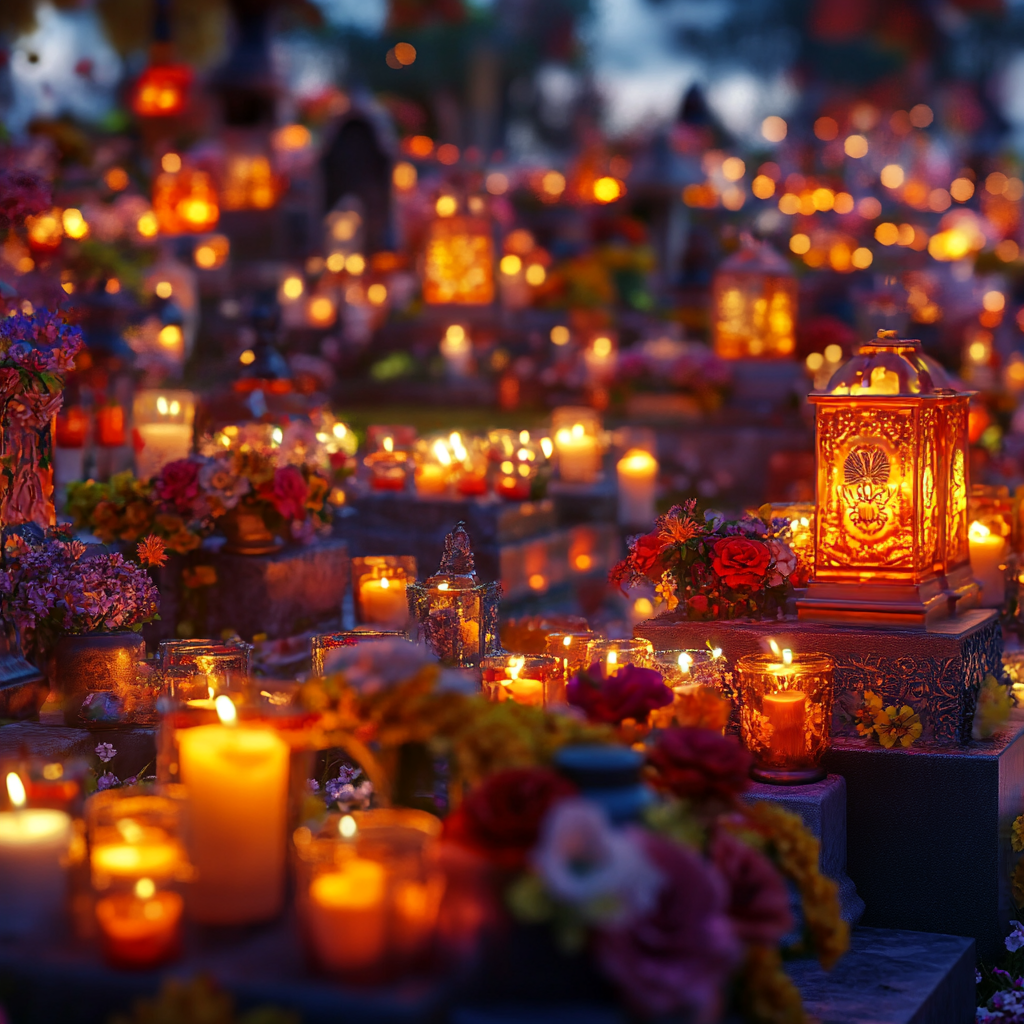
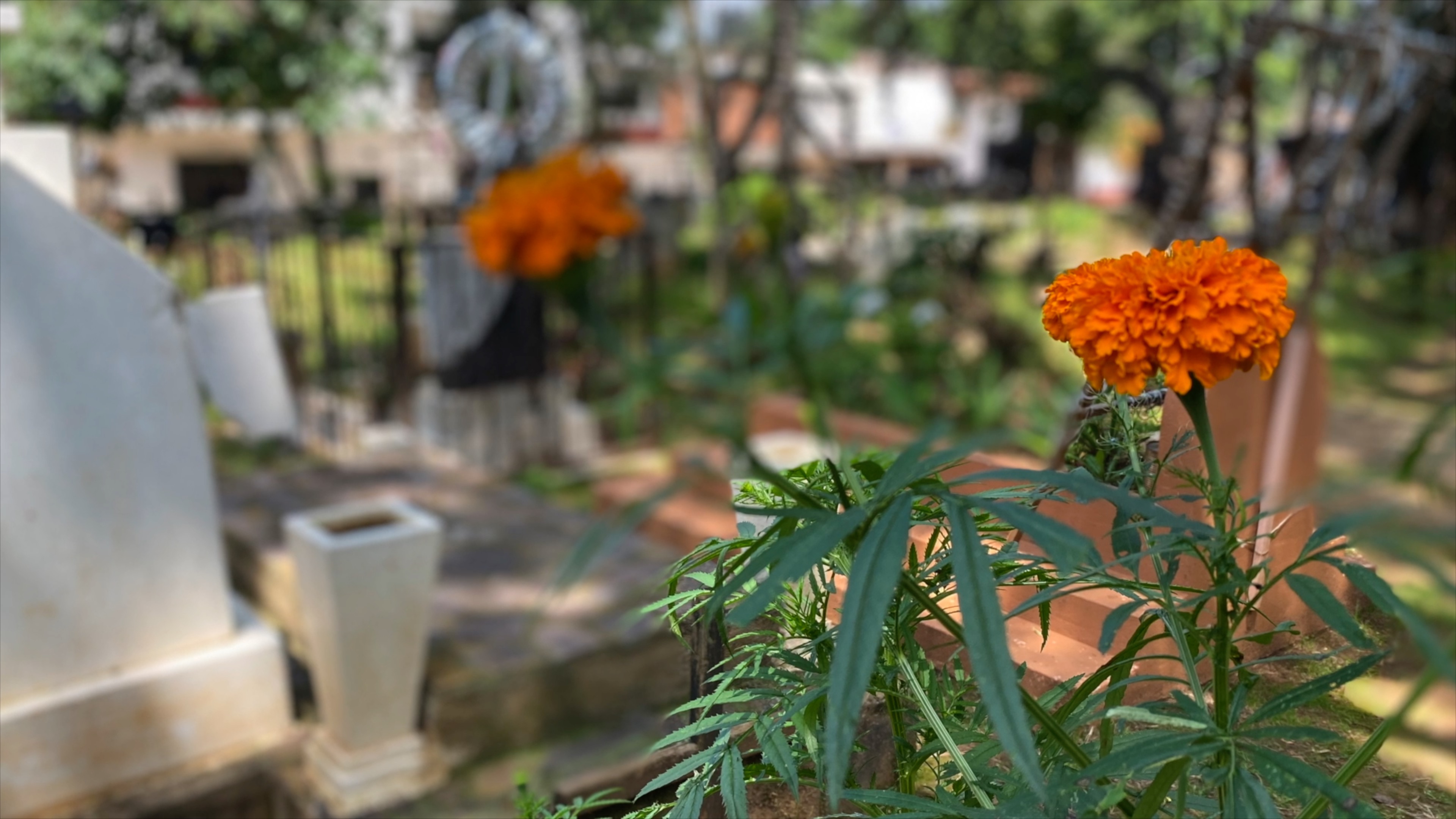
Then I noticed the entrance to a cemetery I hadn’t seen before. In fact it was a big cemetery with half on one side of the street and half on the other. I hadn’t been to a Mexican cemetery yet so I stopped to check it out. This was where all the magic happened on the Night of the Dead.
Every time I visit a new little pueblo I try to imagine what it’s like to live there. The advantage of all the towns around here (one of them) is that they are only an hour away from the city of Morelia. Morelia is the capital of the state of Michoacán and has a population of about a million people. It has an international airport and is home to such American chains as Wal-Mart, Sam’s Club, and Costco in addition to Mexican chain stores. It is an interesting and historic city with an amazingly beautiful centro full of historic buildings.
Although it is a small mountain town, Tzin offers reliable utilities including high-speed internet connections via fixed phone line or cable according to the agent I spoke with. If you want to live more remotely, satellite internet is readily available in the region.
When I first arrived in the area I saw a house for rent here in Tzin that was really lovely with a view of the lake for $11000 pesos per month. I happened to run into the agent who showed me that house recently and it’s still available, so I don’t think there is much competition for housing, at least in the rainy season. I’m sure there are more affordable places to rent in the vicinity too.
One of the advantages of living in this area is the vicinity to Morelia. Morelia has first class shopping. Even those who like American style shopping can find Wal-Mart, Office Depot, Home depot, Ace Hardware, and more. The city has arts festivals and lots of cultural activities. El Centro is very attractive. In fact, it’s a UNESCO World Heritage Site and about centro Morelia they say:
“Built in the 16th century, Morelia is an outstanding example of urban planning which combines the ideas of the Spanish Renaissance with the Mesoamerican experience. Well-adapted to the slopes of the hill site, its streets still follow the original layout. More than 200 historic buildings, all in the region’s characteristic pink stone, reflect the town’s architectural history, revealing a masterly and eclectic blend of the medieval spirit with Renaissance, Baroque and neoclassical elements. Morelia was the birthplace of several important personalities of independent Mexico and has played a major role in the country’s history.”
Another thing people like about this area is the climate. Although Tzintzuntzan is only about 19 degrees north of the equator, the high altitude of about 7300 feet creates a moderate climate all year round. The warmest month is May when temps can spike into the upper 80s during the day, and the coldest is November thru February when night and early morning temps, on occasion, may drop to freezing, but during the day the sun warms up the area nicely.
For potential foreign residents seeking a place to live in Mexico, Tzintzuntzan offers an opportunity to live and integrate within an authentic Mexican town; in an area that twenty years ago was never on the radar of those seeking living places in Mexico, and which today is being discovered by people who want to live in a mountain environment, relative close enough to modern amenities and far enough away from the urban traffic and congestion.
This ancient highland town offers residents an authentic character and charm, clean and crisp mountain air, surrounded by forests and lakes often framed by azure-blue skies and set against the backdrop of a beautiful and historic environment.


 Insights, stories, and guidance for creating a life of freedom and courage in Mexico and beyond