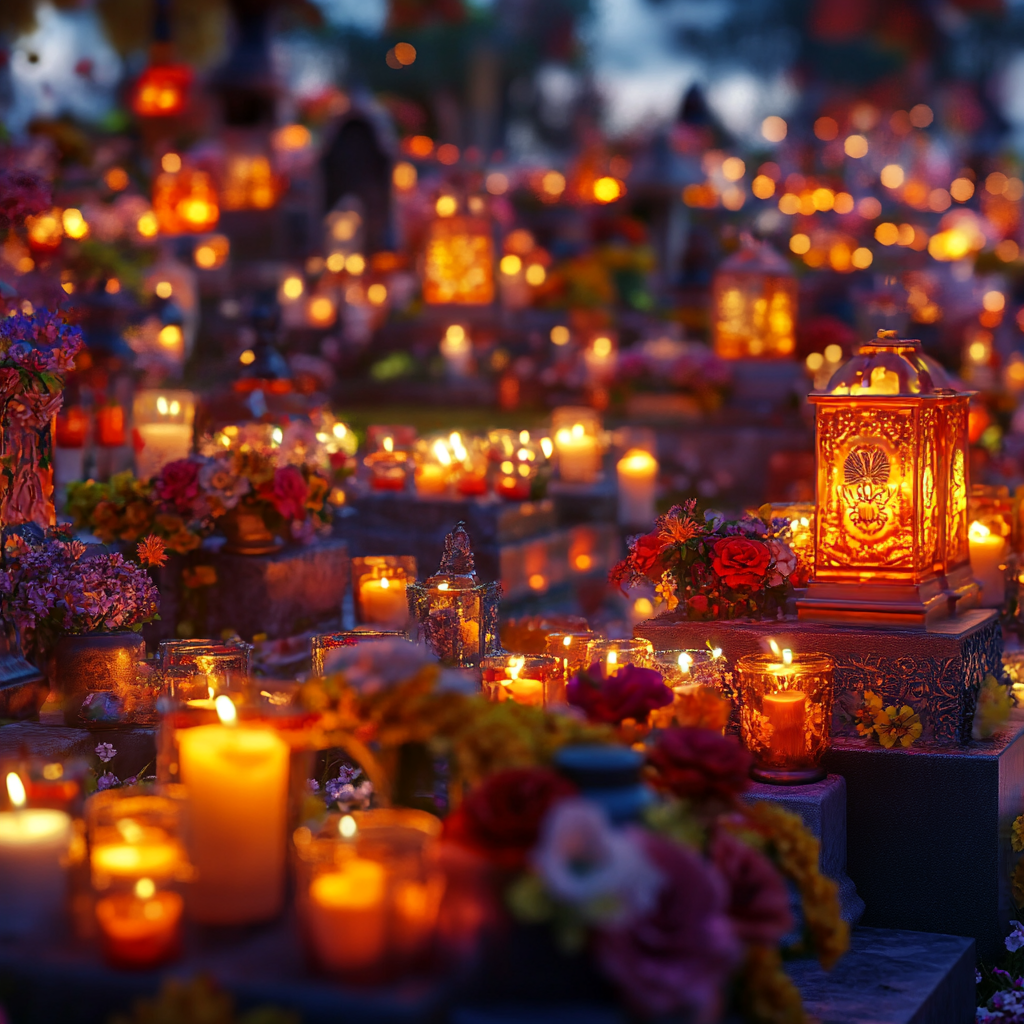
It’s late October in Michoacan and across the land farmers are harvesting their beautiful crops of cempasuchil (marigolds) and other flowers to make the decorations, head dresses, an offrendas (offerings) for the Day of the Dead, Dia de Los Muertos.
I made the trip to the small pueblo of Capula to see the Catrina Festival. This small town is known for its artisans of pottery and especially of Catrinas. As I make the drive on not so familiar roads i”m reminded that the countryside of this part of Mexico is so beautiful, and that I have fresh eyes to appreciate it since I don’t come this way much. That’s one thing I love about travel: always seeing new things gives you fresh eyes so you can really see what’s around you.
I’ve been to this sleepy town before, it’s close to where I originally stayed in the area with Julio and Emilia in Iratzio. I like Capula because it always seems sunny, and a bit warmer than by the lake, which I’m loving right now!
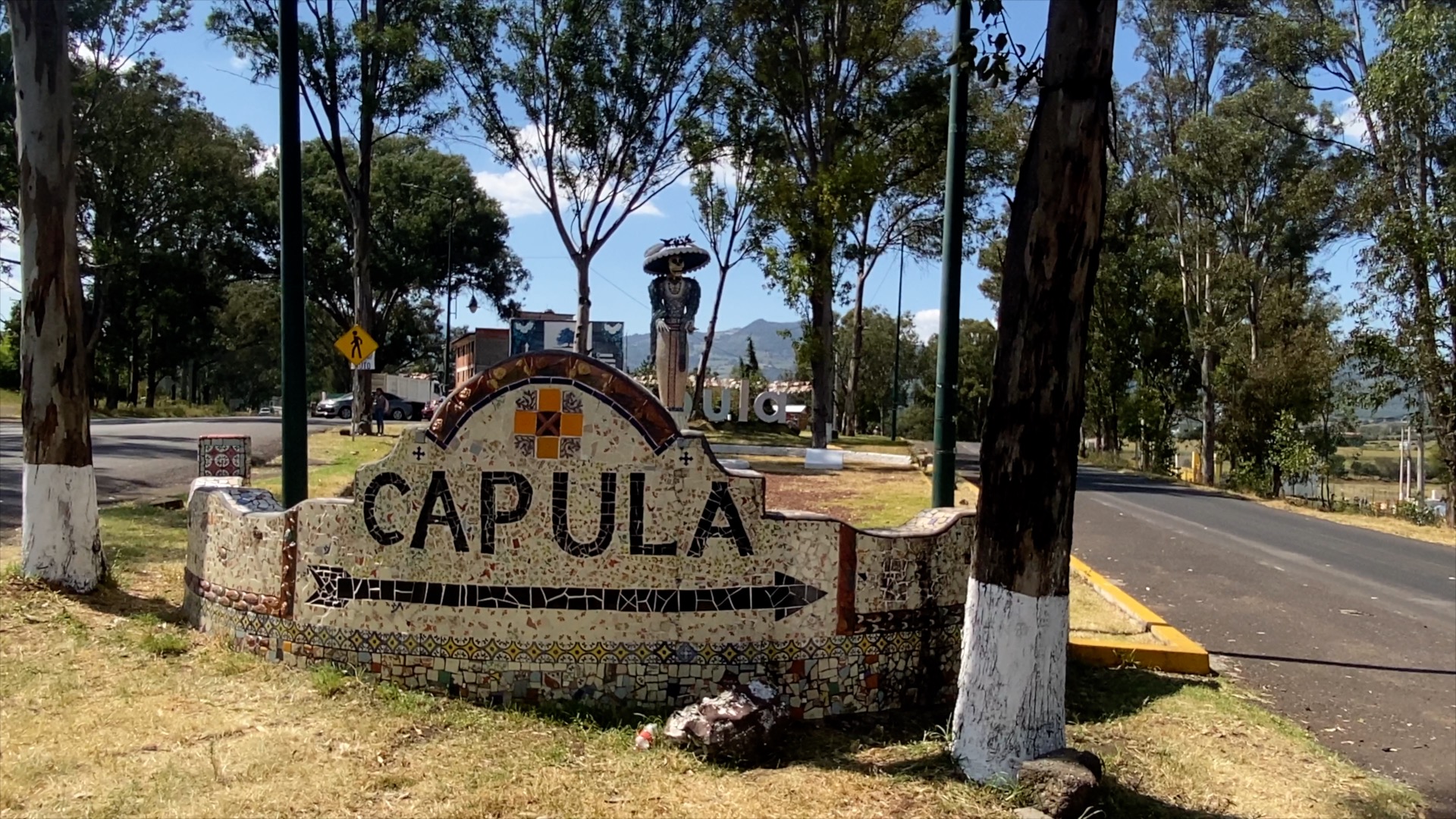
It’s the kind of sleepy pueblo I could think of living in full time, surrounded by beautiful countryside, with hills and mountains covered with lush pine, oak and fir trees. And close to attractions and activities like Patzcuaro and in Morelia. In my imagination I buy a nice house here with a garden and live and get to know my neighbors and the rhythms of this part of Michoacan.
But I’m not ready to settle down yet! And in the back of my mind I’m planning where to go next in this large and interesting country. I didn’t mean to zig zag across central Mexico, and it hasn’t been the most efficient path I guess. But the heart wants what it wants (to quote Emily Dickenson and Selena Gomez). I’d like to spend some time at the coast this winter but I don’t want to skip over the states of Hidalgo and Puebla, and I don’t want to drive through Guerrero for safety reasons. So we’ll see…
I easily found a place to park on a side street and walked over to the crafts fair. It was Thursday around noon and there were people around shopping and taking pictures, and eating, but it wasn’t crowded.
They were setting up for the Concurso (or juried competition) of the talented craftspeople of this village, and more festivities in the evening. Every year, on the weekend before Dia de Muertos, Capula hosts the Festival, in a town where the tradition of ceramic Catrinas began with the artist Juan Torres Calderone. And for those who wish to support the artisans, the shopping is wonderful!
“This is where I got my Catrina from….they actually export them to Sydney…in their little coffins”
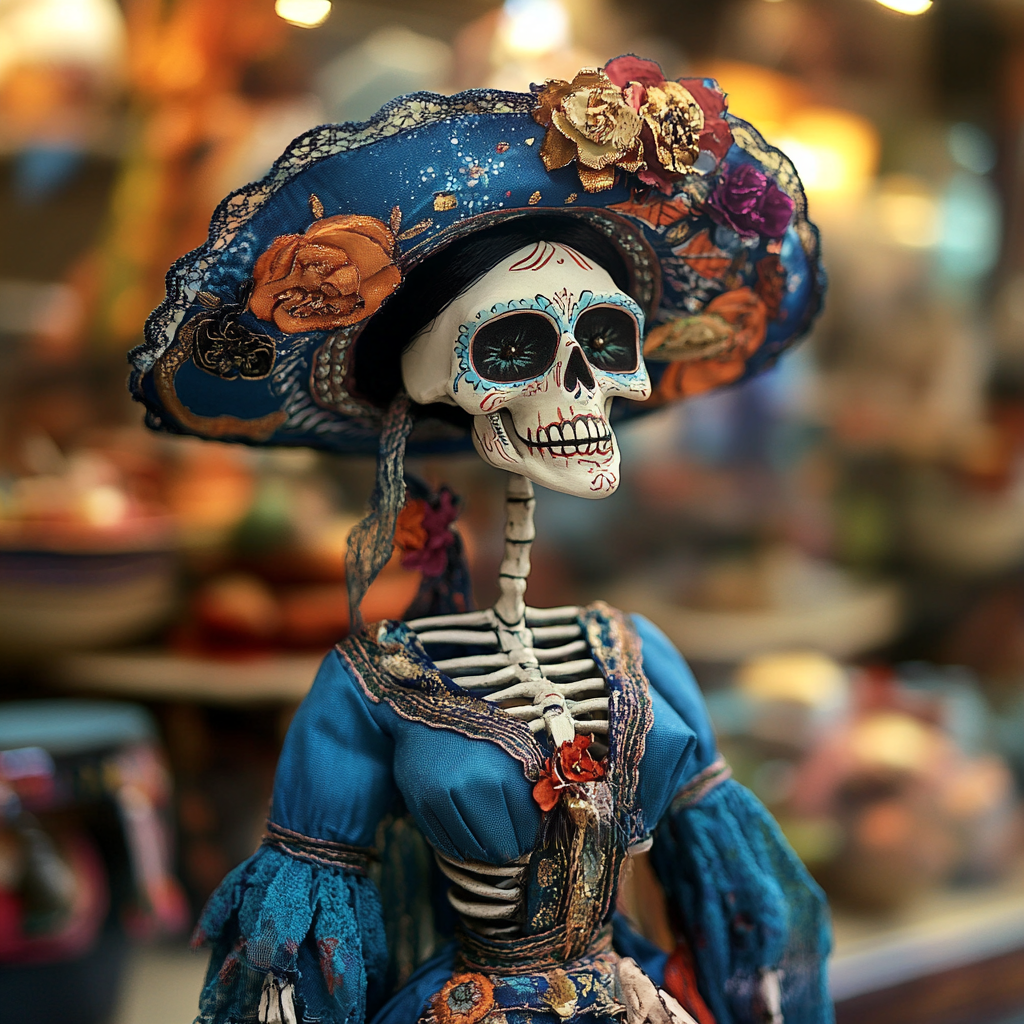
The Spanish word catrín is often translated as “dandy” – an elegant, well-dressed man. That, of course, makes a catrina his female equivalent.
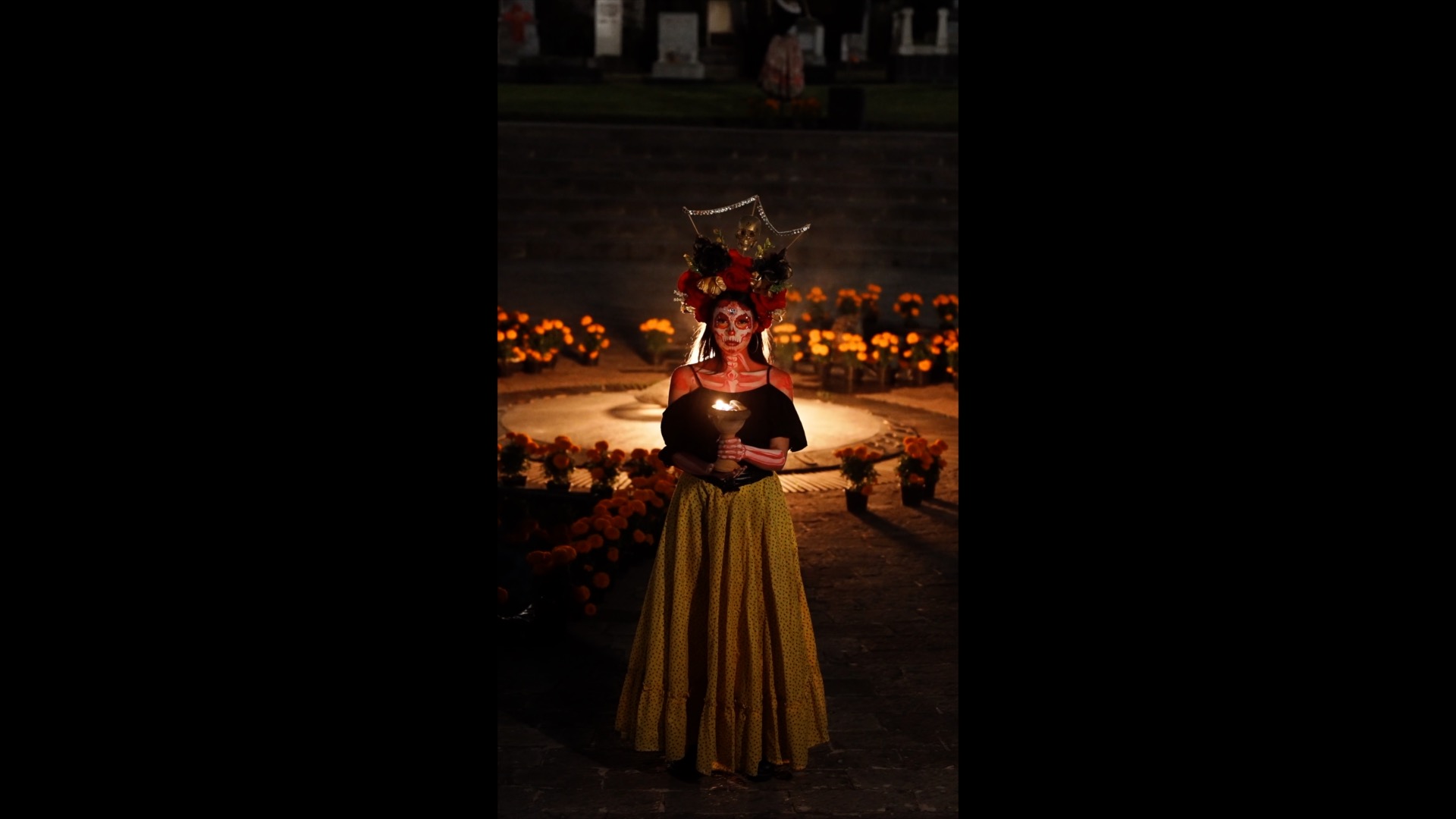
Catrinas almost always wear glamorous hats and sometimes snake or feather boas, and it’s not uncommon for them to be seen smoking cigarettes or carrying fancy purses.
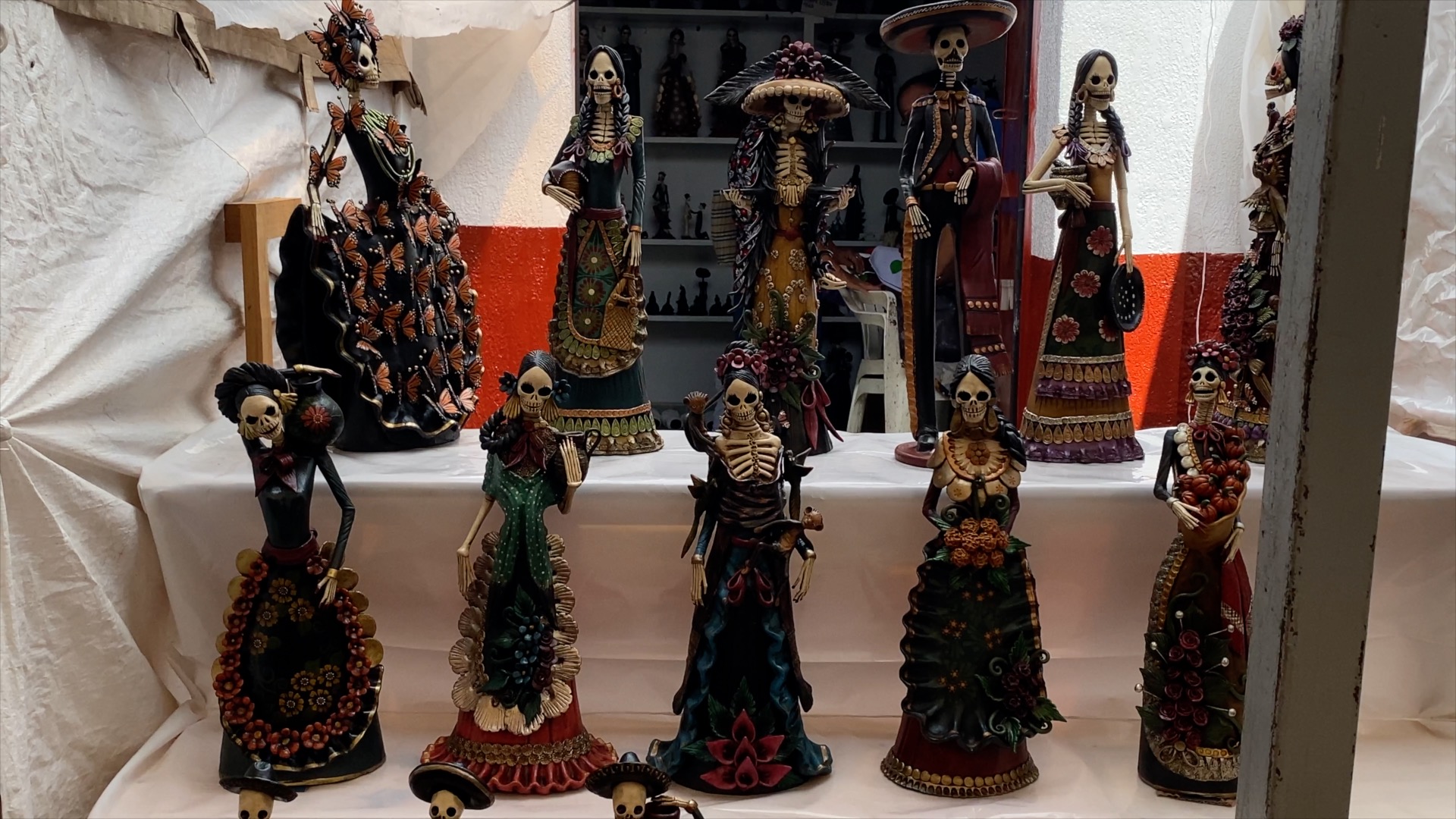
While a Catrina can be depicted on a mural or in a painting, the Catrinas in Capula, are all made of clay. There are statues, ranging in size from as tall as your finger to near-life-size Catrinas ready to welcome guests into your entryway. Capula, a village of about 5000 people in between Morelia and Patzcuaro, is the Catrina capital of the world.
It all started with Jose Guadalupe Posada who was a Mexican printmaker and graphic artist producing advertisements, posters, and, most importantly, political cartoons in the 1870s. His satirical work targeted the country’s “new rich” and its notoriously corrupt figures, including President Porfirio Diaz.
Díaz is lauded for modernizing and bringing financial stability to Mexico, but he also led his government in repression, corruption, and excess, and had an obsession with European materialism and culture.
This part of Mexican society copied the customs and dress of Europeans and generally played down or denied any indigenous heritage they had.
Concentration of fantastic wealth in the hands of the privileged few brewed discontent in the hearts of the suffering masses. This lead to the overthrow of Diaz in 1911 in the Mexican Revolution, and he fled to Paris to live in exile until he died 4 years later.
Anyway, the artist and printmaker Posada used skeletons dressed in European clothing to represent the Mexican bourgeois class and call attention to what he thought of as their hollow lifestyles and lack of moral ethics. He was regularly published in newspapers that were very popular.
His work might have been forgotten were it not for Diego Rivera’s inclusion of a Posada-like skeleton lady in his famous 1946 mural, Sueño de una Tarde Dominical en La Alameda Central (Dream of a Sunday Afternoon along the Central Alameda). Rivera painted both himself and Posada in this mural (along with Rivera’s wife Frida Kahlo), and he placed his skeleton lady, who he called “La Catrina” between the two men.
His Catrina was even more ornate than Posada’s original, and she represented both the Mexican ability to live with and celebrate death and death’s leveling of the class system that leaves no one out.
In 1980. Another Mexican artist, Juan Torres, unable to afford the rents in Morelia, moved out to the rural village of Capula. There he worked on his paintings and sculptures, but he also came up with an idea that would foster economic growth in his new town.
Torres thought that Capula would be an ideal place for crafting Catrinas. The residents knew how to work with clay and they knew how to paint. He opened up a workshop and began training them in how to adapt these skills to making Catrinas. These students have gone on to train others, and today, there are over sixty two families in Capula making Catrinas.
Since pre-hispanic times, Capula had been a pottery production town. Clay was sourced nearby, and the local production and painting traditions had endured for generations.
And now, “Catrin” and “Catrina” have become popular costumes during Day of the Dead celebrations in Mexico and everywhere. They typically feature calavera (skull) make-up.
The male counterpart to Catrina, wears the same skull makeup and black clothes, often a formal suit with a top hat or a mariachi costume. A cane might also be part of the costume.
I’m glad I didn’t skip walking around outside of the Catrina Fair, along the main street of Capula. There I saw artisans working on their arts and crafts and I met Llisabell Martinez working on her giant Catrina. She has a lovely shop here in Capula and I bought a present for my son from her lovely collection of skulls, Catrinas and other pottery.
It’s an exciting week here in Patzcuaro, as the whole area gets ready for the day of the dead. Everywhere you look are beautiful decorations and preparations for the special holiday, and I’m so glad to be here!
 Insights, stories, and guidance for creating a life of freedom and courage in Mexico and beyond