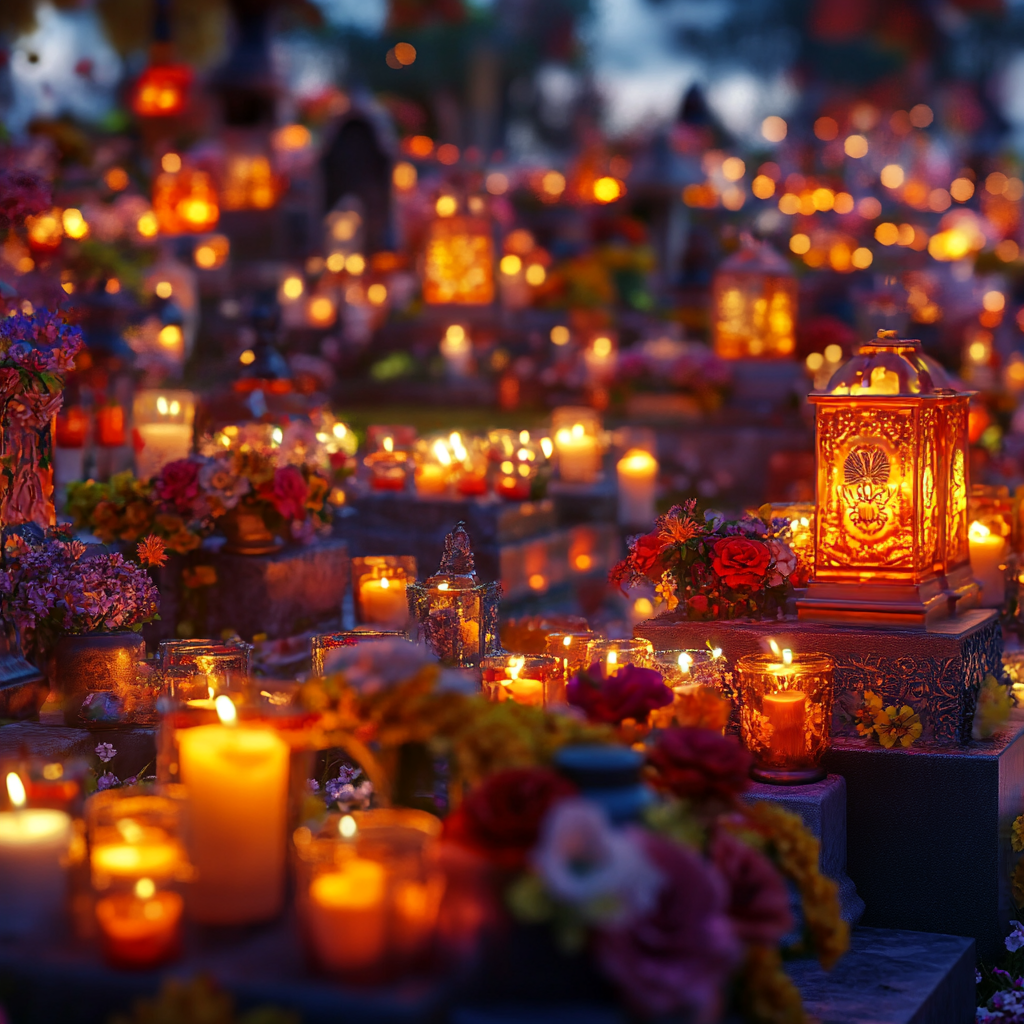
Mexico is a culture that has created a unique and interesting way to face the fact of death and the departed. Mexico in general is colorful, beautiful, and festive. The people, the food, and the celebrations are bright, loud, and sometimes spiritual. So when it comes to death, in true Mexican style, Mexicans celebrate with food, drink, beauty and music.
Noche del Muertos is a celebration when it is believed that the veil between the real world and the spirit world is open so our deceased loved ones can come back to visit us. Mexicans view it not as a day of sadness but as a day of celebration because their loved ones come back and celebrate with them.
Families will gather during the night at the cemeteries (panteons), light candles, and place flowers and the deceased’s favorite food and drinks on the burial sites of their lost loved ones. There is festive music and definitely no crying. The kids were running around asking for candy and playing. This is a reflective and fun get-together welcoming the deceased back to celebrate life and enjoy all their human families again.
Pan de Muertos, or day of the dead bread, is an essential part of the festivities and is also placed on the altars. Sugar Skulls are enjoyed by the young and old during this time also. Mole, tamales, pozole, and sopa azteca are prepared by families with the recipes being passed on from generation to generation.
• Altars (Ofrendas)
The Aztecs used to offer water or their favorite drinks and food to the deceased to help them on their journey to the land of the dead. Now, Mexican families set up beautifully decorated altars in their homes and place photos of the loved ones they have lost along with other items.
The ofrendas usually consist of water, the loved one’s favorite food and drink items, flowers, bread, and other things that celebrate the dead person’s life.

• Marigolds (cempasuchil)
Marigolds are used during Dia de Muertos celebrations by being placed on the altars and on the burial sites. The Marigold flower is thought to guide the spirits back with their intense color and pungent smell.
• Skulls (calaveras)
Skulls are a huge part of the holiday. Skulls were used during rituals in the Aztec era and passed on as trophies during battles.
Today, during Dia de Los Muertos, small decorated sugar skulls are placed on the altars. There is nothing grim about these skulls. They are decorated with colorful edible paint, glitter, beads, and sport huge smiles.
• La Catrina
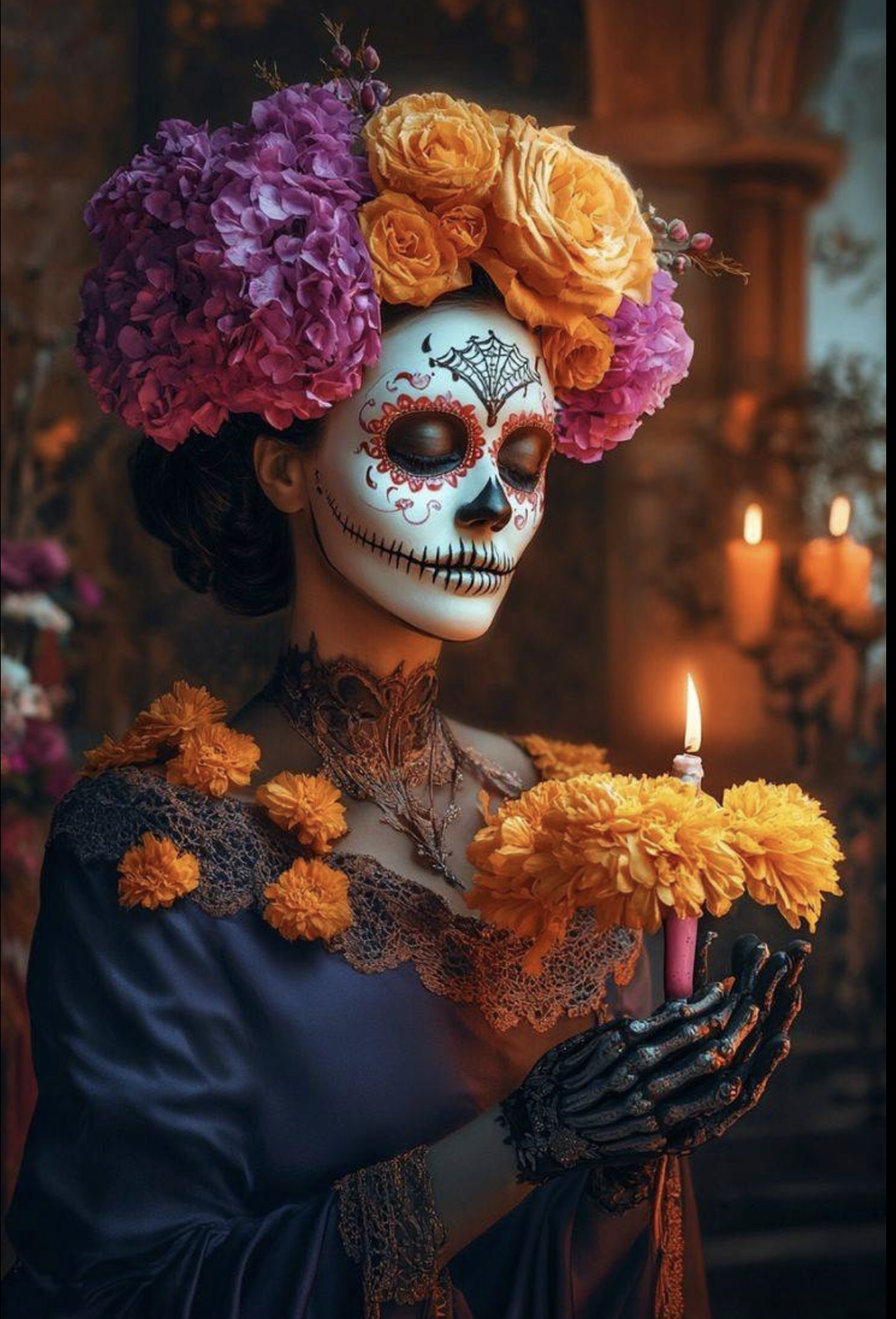
The skulls (calaveras) and skeletons (calacas) that are so prominent in today’s festivities came about at the beginning of the 19th century when cartoonist and social activist José Guadalupe Posada drew La Catrinato protest the Mexican people’s desire to look more European. La Catrina has become one of the biggest symbols of Day of the Dead with people painting their faces with skulls and flowers.
• Papel Picado
Papel picado means perforated paper and is an important part of Mexican culture. The art
comes from the Aztec tradition of chiseling spirit figures on wood. It is used during Day of the Dead celebrations by stringing them on the altars and up in the air in the streets. Ofrendas showcase fire, water, earth, and air. Papel picados represent air on the altar.
Dia de Los Muertos
October 27 is the day that pets that passed away are remembered
October 31 is All Hallows Eve, All Saints Eve, and Halloween
November 1 is Noche de Muertos, Night of the Dead, All Saints Day, Día de Todos los Santos, Dia de los Angelitos, and Day of the Little Angels
November 2 is Dia de Muertos, Day of the Dead, All Souls Day and Los Fieles Difuntos
November 3 – The Dead go back to death,
and life returns to the living.

In the end,
when our eyelids
find their
infinite darkness,
You will know
that our bodies
were tiny
universes,
and that I
loved you
with a thousand
seas.
– Christopher Poindexter
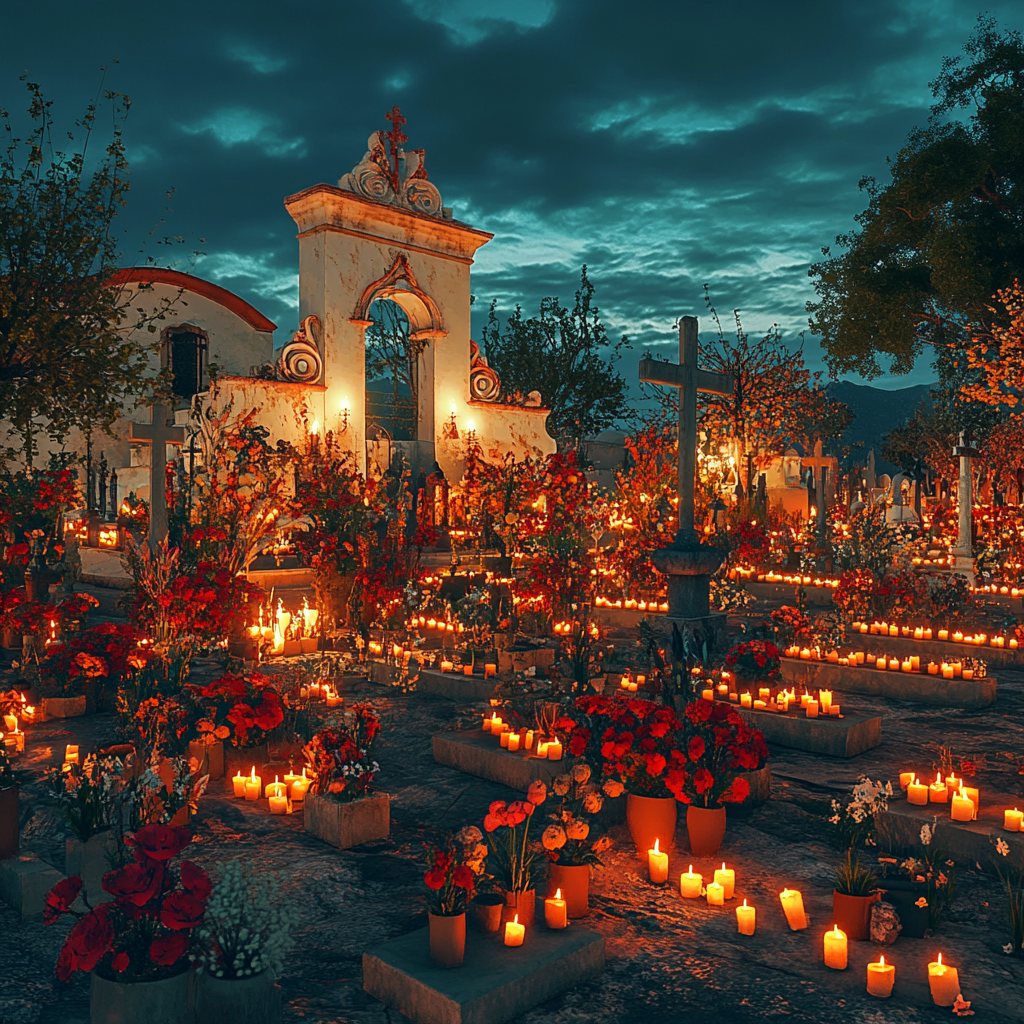
“Only the cempasúchil knows how much I love you and miss you.
I told each of your 400 petals a story of ours.
Only the cempasúchil knows how much I miss you, I’ve hidden a tear in each of its 400 petals.
Only the cempasúchil knows how much I love the day of the dead, and with its aroma wraps my house, my hands, my hair, and it’s as if I were again to feel your perfume, as if we were again together, preparing the mole, tamales, the pascal, the atole, the sweet rice and of course the camote one.
Only flowers know my sorrows and pains. Only they dance in the afternoons to cheer me up, when I sit alone in the middle of the hill to look for you in the sunset.
That’s why I’m still waiting for you, since 100 lives and counting, because I keep the memory of the cempasuchil forming immense paths, that lead me to your arms life after life, body after body, it’s always the cempasuchil that finds us again, on this plane and in those to come… 


Sixth Sun

Visiting Patzcuaro, a quaint town in Michoacán, Mexico, during Día de los Muertos is an unforgettable experience, full of beauty, spirituality, and rich traditions. Nestled by the lake that shares its name, Patzcuaro becomes a vibrant tapestry of color, light, and devotion each year as families come together to honor their ancestors. This celebration is not only a visual spectacle; it’s also a deeply spiritual occasion that reverberates through the town’s cobblestone streets and centuries-old cemeteries.
During the week of Día de los Muertos, Patzcuaro’s Plaza Vasco de Quiroga, known as Plaza Grande, undergoes a remarkable transformation. Typically a serene square where locals and visitors can enjoy the peaceful atmosphere and colonial architecture, Plaza Grande turns into a lively art market, filled with stalls showcasing traditional crafts, vibrant artworks, and handmade souvenirs. Artisans from all over Michoacán and beyond set up booths to display their creations—everything from intricately painted ceramics and embroidered textiles to hand-carved wooden figurines and brightly colored sugar skulls. The air buzzes with excitement as musicians perform, vendors sell street food, and families wander from stall to stall, adding to the festive spirit.
Patzcuaro is a town steeped in history. Dating back to pre-Hispanic times, it was once a prominent center for the Purépecha people, who believed in an afterlife and held ceremonies to honor their deceased long before Spanish colonization. Over time, these Indigenous customs blended with Catholic traditions, creating the vibrant and unique celebration of Día de los Muertos we see today.
Today, Patzcuaro retains its historic charm with Spanish colonial architecture, red-tiled rooftops, and whitewashed adobe walls. Plaza Vasco de Quiroga, the heart of Patzcuaro, is a lively square filled with markets, cafes, and artisans selling beautiful handicrafts, many of which are symbolic of Día de los Muertos. Marigold flowers—symbolizing the fragility of life—adorn the town, adding a golden hue that guides the souls of the departed back to the realm of the living.
Día de los Muertos, or Day of the Dead, is not a mournful occasion but a joyful one. Here, death is seen as part of the natural cycle of life. Families believe that the spirits of their loved ones return each year to visit, nourished by the aromas, colors, and memories brought to life by the altars, or *ofrendas*, lovingly arranged for them.
In the days leading up to Día de los Muertos, the streets of Patzcuaro and the neighboring villages hum with energy. Families prepare by gathering marigolds, candles, food, and photographs. The market stalls overflow with sugar skulls, candles, and Pan de Muerto—a sweet bread often adorned with bone-shaped decorations. The air is filled with the earthy smell of incense and copal, setting the tone for this sacred time.
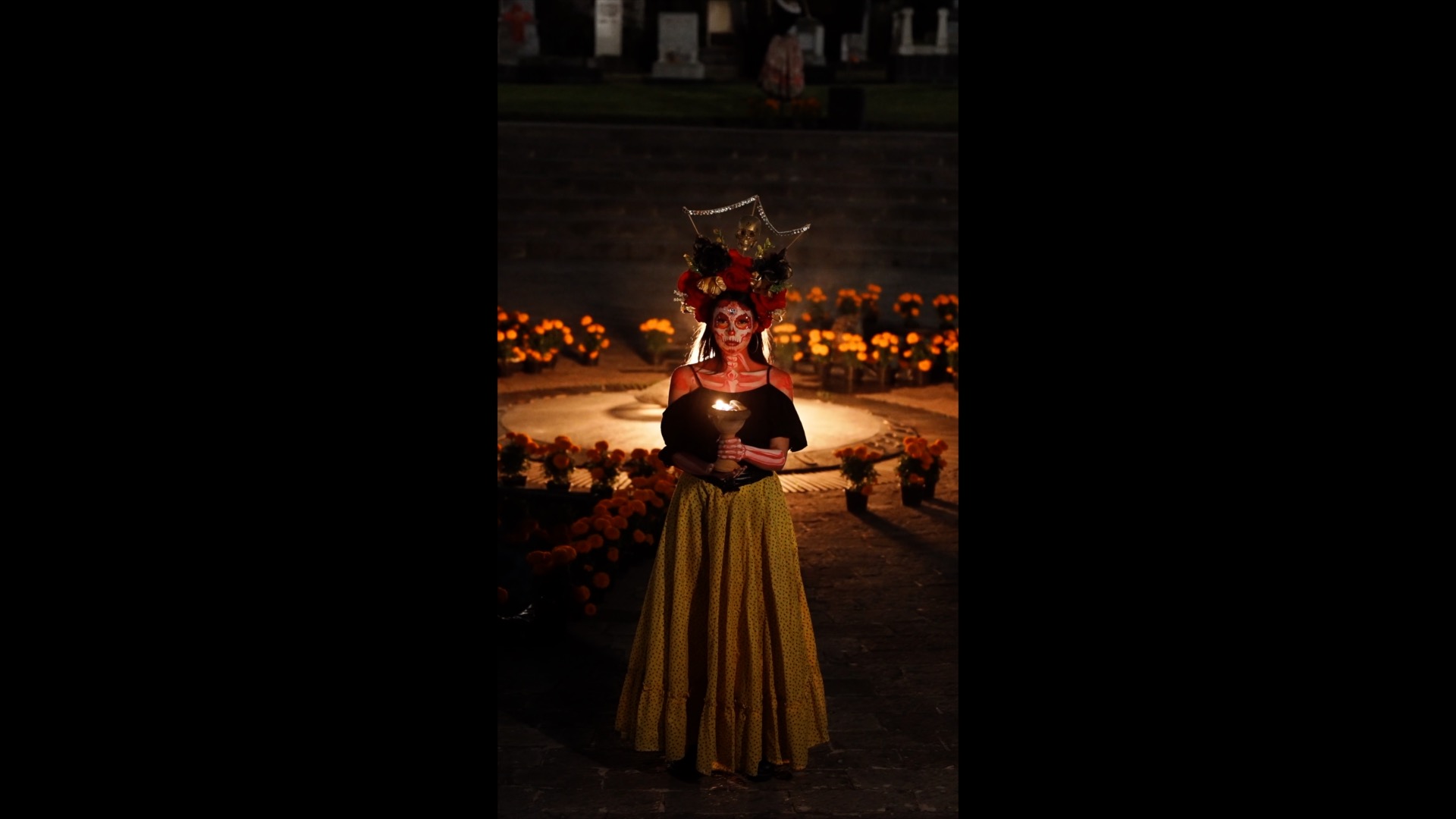
One of the most unforgettable sights in Patzcuaro is its cemeteries during the night of November 1st. Cemeteries here are transformed into fields of flickering candlelight, as families gather around the graves of their loved ones, setting up small altars decorated with marigold flowers, photographs, and the favorite foods of the deceased. The candles are said to guide the souls back to their families, while the food and drink nourish them on their journey.
Witnessing the candle-lit graves and families gathered together to remember their loved ones is both humbling and heartwarming. There is a profound sense of community as people honor the past while embracing the present.
 Insights, stories, and guidance for creating a life of freedom and courage in Mexico and beyond