
If you’re watching this, there’s a good chance you’re stuck somewhere you don’t want to be. Maybe it’s a career. Maybe it’s a location. Maybe it’s just… a life that doesn’t fit anymore. Have you ever had a moment where you realized: I can’t do this for ten more minutes, let alone ten more years?
Hola, I’m Mora, and I live in the mountains of Mexico now. But just two years ago, I was an OR nurse sitting in a dark parking lot after a long shift, thinking about driving off a bridge.
I’ve gotten a lot of emails from people who are exactly where I was: trapped in lives that look successful from the outside but feel suffocating on the inside. So today, I want to tell you the full story of how I got out.
For most of my adult life, I was a nurse. Not just any nurse, an OR nurse, which means I worked in operating rooms where the stakes were high and mistakes could cost lives. I was trained to be meticulous, fast, and to a certain degree… invisible. To put my head down and push through.
And I did. For 28 years.
I raised my son as a single mom. I paid my mortgage. I showed up for every shift, even when my body begged me not to. From the outside, I had built a good, responsible life.
But inside I was dying.

The thing about burnout is that it doesn’t happen all at once. It’s a slow erosion; like water wearing away stone. You don’t notice it’s happening until suddenly, you’re sitting in a parking lot after a 14-hour shift, gripping the steering wheel, thinking thoughts that scare you.
That’s where I was when everything changed.
And today, I want to tell you that story. Not because it’s dramatic, but because I think some of you might be sitting in your own version of that parking lot right now. And if you are, I want you to know: there’s a way out.
To understand how I got to that parking lot, you need to know where I started.
I was a naive teenager and at 19 years old I was married and pregnant. Soon after I was a single young mother on welfare. Looking at my infant son and knowing I was all he had, I was rather suddenly aware that I needed money, and I would for many years.
I’d tried minimum wage jobs where after daycare and taxes, I was basically paying someone else to raise my son. I needed real skills. Something that would always put food on the table. Nursing promised that.

So I went to school. I studied late at night after my son went to bed. I passed the NCLEX exam and became a nurse at 28, not because it was a calling, but because it was a calculation. I was a single mom with an 8 year old living in Northern California and I needed to work.
My first job paid $15 an hour at a rundown nursing facility on graveyard shift. Thirty-five patients, two overworked aides, and me: barely licensed, completely terrified. But I showed up. I learned. I got better.
Eventually, I specialized in the OR. Operating room nursing is intense; it’s fast-paced, high tech, and there’s no room for error. But I was good at it. Really good. I earned respect. I became the nurse they could count on. And I was really proud.
That pride mattered more than I realized at the time. See, since I’d become a mother on welfare at nineteen. I carried a lot of guilt about what I judged to be my irresponsible behavior. So being Mora, the OR nurse, the responsible one, the one who did everything right and the one with the perfect credit score, who could handle anything, that became the basis for my whole identity. I wasn’t just making up for lost time. I was proving I wasn’t that scared nineteen-year-old anymore.
And for a while, many years, actually, the job was good. There were moments of real connection: with patients, with families, with the work itself. That’s what made nursing feel meaningful. I was proud of my abilities and my skill at working with demanding surgeons. I was glad to be able to pay my bills, and even save a little.
But over time, I watched that slowly get stripped away.
Healthcare became corporate. We went from patient care to metrics. From bedside conversations to electronic charting that took us away from patients and took longer than the actual care. We were told what to say, how to chart, how to behave, all in the name of ‘efficiency’ and ‘compliance.’ The small moments that made nursing human got squeezed out by productivity protocols and insurance requirements.

It wasn’t just the system that wore me down. It was the frequent humiliations. Surgeons who berated you for not reading their minds. Being screamed at in the OR for not being perfect, even after years of experience. That experience? It meant nothing the moment someone decided you’d made them wait two extra seconds.
And here’s the part that really gets under your skin: you were expected to take it. To smile. To be charming and accommodating and perfect, even while being treated like you were disposable. The anger from that, from being told to shut up and be grateful you have a job, it doesn’t just go away. It builds. And you have nowhere to put it.
There was the short-staffing. Hospitals cut costs by running skeleton crews, which meant there was no time off. Getting a vacation approved was like going to war. Staying late was a weekly occurrence because there was no one to relieve you; you couldn’t just walk away and leave a patient on the table. That would be abandonment.
I was on call weekly, overnight, and every fifth weekend usually. That meant rushing into the hospital at 3 a.m. for emergency surgery. Twelve-hour shifts turning into sixteen, eighteen, sometimes twenty hours. And if you complained? Other nurses would judge you. There was this internalized oppression; this unspoken rule that if you couldn’t handle it, you were weak and selfish. So you don’t complain. You just… kept going.
So, I can’t point to any one moment and say ‘that’s when it broke.’ It’s a slow erosion. Patient loads increased. Staffing got thinner. The paperwork multiplied. The corporate culture grew more oppressive.
If you raised concerns about safety, and you’d be told your license covered it. You’d ask for proper training, and you’d be reminded we were short-staffed. You learned quickly what not to notice. What not to name. What happens to the ones who do.
So you stop asking questions. You stop reacting. You shrink, until shrinking feels like a strength.
Because here’s what nobody tells you about being ‘the strong one’: you start to believe you’re not allowed to break. You start to think that endurance, year after year, is the same thing as strength. That if you’re struggling, it must mean you’re weak.

So when things started getting bad, really bad, I didn’t tell anyone. Not my son. Not my friends. I just kept showing up. I tried to make it better on my own: I changed jobs, I meditated, I journaled. Eventually I thought, ‘I’ll move to Oregon so I can invest in real estate; that way in the long run, when it brings me some income, I won’t have to work so much.’
I kept trying to fix the problem without admitting what the problem actually was.
Until one night, after a long shift, I found myself in that cold, dark parking lot thinking about driving off the River Bridge.
I knew something had to change, but I wouldn’t let myself change my profession. After all, everyone needs a job, and there are plenty of people that don’t like theirs. So I just got up every morning filled with dread and pushed myself through. My unconscious mantra became: Just get through this day. Just get through it.
Then something miraculous happened.
I got laid off.
The hospital said they were in a “dire financial situation” and had to cut staff. They offered me a position at their sister hospital in another town. And as I sat across from my manager and the HR person, listening to them tell me I was being let go, I felt something I didn’t expect:
Relief.
Profound, toe-tingling relief.
I felt elated for a moment, but of course, that didn’t last. I had a mortgage to pay. I needed food to eat and I had bills. I wasn’t a flake. Within three days, I had a job interview lined up with the competing hospital in town; there’s no shortage of nursing jobs out there.
But the thought of it filled me with dread. New systems to learn. New politics. The same drudgery. My body felt like dead weight, and mentally, I was desperate for a way out.
We build lives that cost so much to maintain that we can’t afford to stop working, even when the work is killing us. The mortgage demands it. The insurance demands it. The retirement account demands it. I had to ask myself: what am I actually protecting if all this makes me want to die? And is it worth what it’s costing me?

Somehow, in those three days between being laid off and that new job interview, I was visited by grace.
For the first time, I allowed myself to think: What if?
What if I didn’t get another horrible job? What if, instead, I took the money I’d saved and ran away to Mexico?
What a crazy thought.
But the feeling of happiness and lightness that came with that crazy thought was so completely different from the dread I’d been living with; it got my attention. For the first time, I didn’t brush it off and make myself get back to work. I actually wondered: Could I do this?
I began analyzing my finances. Retirement accounts, savings, everything I had. I stayed up late calculating the cost of living in Mexico and how long my money might last. This wouldn’t be a vacation; I never wanted to come back. And I had some money. Not a lot. Not enough that any financial advisor in the world would ever say, “Sure, it’s fine. Go retire and don’t work anymore.”
But that parking lot moment, that moment of fracture when I realized I was fantasizing about driving off a bridge, it stuck with me.
And then something happened that felt like a sign.
The day of my job interview, I sat in my business blouse with my resume ready, waiting for the video screen to light up with my new potential manager. Nothing happened. They didn’t show up.
Later, they sent an apologetic message: it was a scheduling mishap. They wanted to reschedule.
I looked at that email for a long time.
Then I turned off my computer and put my sofa up for sale.
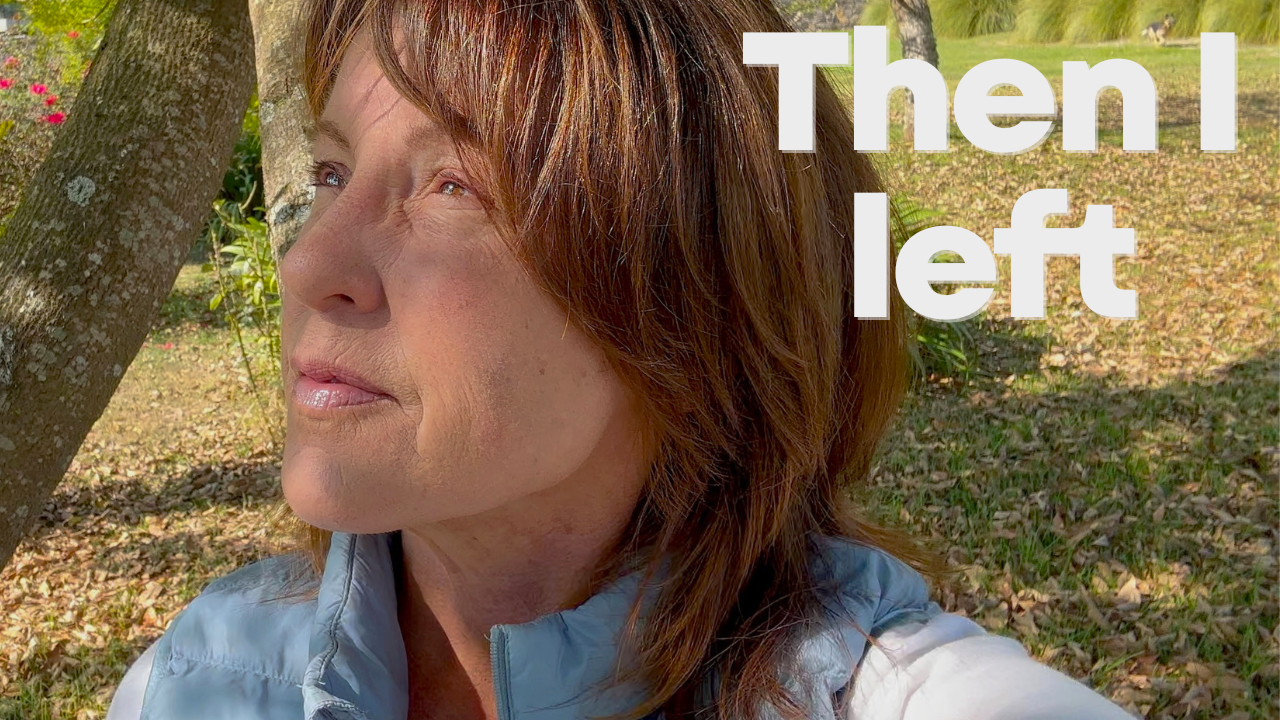
Over the next few weeks, I got rid of so many things. Sold some, stored some, gave away some. I packed my car with my necessities and my two dogs, and I made the long drive to the border of Mexico.
Without a real plan. Without a safety net, and without any guarantee of anything.
And I’m not going to stand here and tell you it was all beautiful sunsets and margaritas after that.
The first few months were scary. I didn’t speak Spanish. I didn’t know anyone. There were bureaucratic nightmares, culture shocks, a few genuinely scary moments on the road, and plenty of days when I sat in my car wondering if I’d made a terrible mistake.
But here’s what was different: even on the hard days, I wasn’t sitting in a parking lot thinking about bridges. Even when I was scared or lonely or completely out of my depth, I was alive in a way I hadn’t been in years.
I started making videos again, not because I had it all figured out, but because I was finally doing something that felt like mine. I explored different regions of Mexico. I made mistakes. I learned. And eventually, I settled here in the mountains.
It’s been a long and wonderful evolution. Good times and really bad times. A lot of fear sometimes. And I’ve found strength I didn’t know I had.
I’m so grateful to be here now. I’ve slowly created a life I actually love. And that feeling of dread and bitterness is a distant memory.
But here’s the thing I really want you to hear:
The hardest part wasn’t the actual move. It was giving myself permission to want something different. To do something different.
You don’t have to move to Mexico. That’s not the point of this story.
The point is that somewhere along the way, a lot of us forget we’re allowed to choose differently. We decorate our cages and call them security. We mistake endurance for strength. We wait for permission that never comes.
I’m not special. I’m not braver than you. I just got lucky enough to get laid off at exactly the right moment; when I was finally desperate enough to listen to that quiet voice saying there has to be another way.
If you’re in your own parking lot right now, if you’re waking up with dread, if you’re going through the motions of a life that doesn’t fit anymore, I want you to know: the cage door is open. You just have to be willing to see it.
Because here’s what I’ve learned: the mental cages we put ourselves in are just thoughts and beliefs. They’re not reality. Understanding that your habitual thoughts, the ones telling you “this is just how it is” or “people like me don’t get to do that”, understanding that those aren’t facts, that’s when huge changes become possible.
We can create the life we want. It’s not necessary to live a life of dread and drudgery.
And if you’re watching this and something in your chest is saying yes, but… I want you to pay attention to that. Because that ‘but’ is usually just fear dressed up as practicality.
You don’t have to have all the answers. You don’t have to make a dramatic move. Just allow yourself to look in a new direction. Just look. Just consider other possibilities. Because if you feel stuck in that dark parking lot, I promise you: there’s a way out.
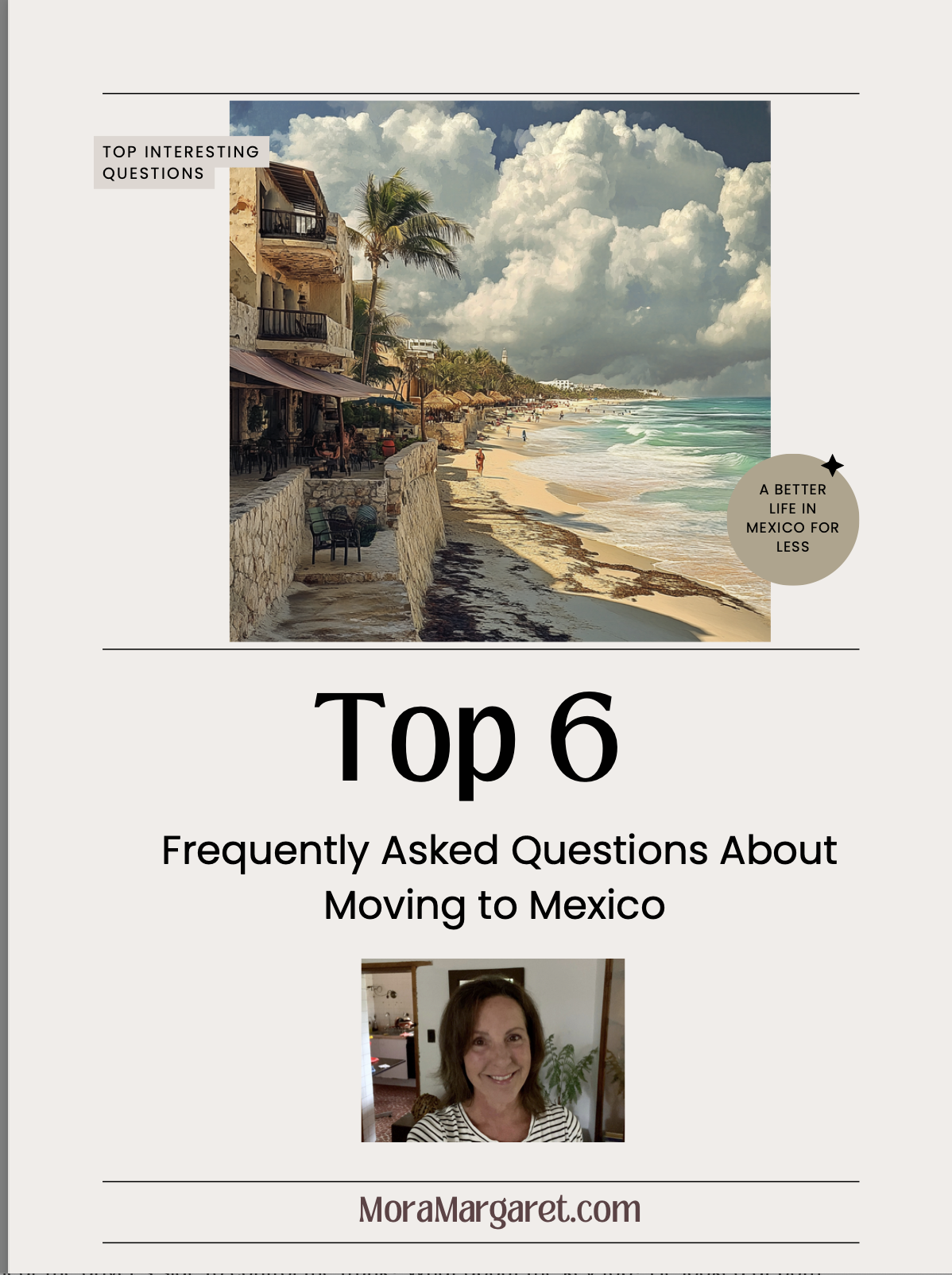
Now, if you are in the planning or dreaming stage of making a move to Mexico, I’ve made a guide that I wish I had when I did it. It’s what you need to know, not a bunch of fluff. Here’s a link for that.
I make videos here about life in Mexico and midlife reinvention. If you want to follow along, hit subscribe. And I’d love to hear from you in the comments: What’s your parking lot moment?


 Insights, stories, and guidance for creating a life of freedom and courage in Mexico and beyond